


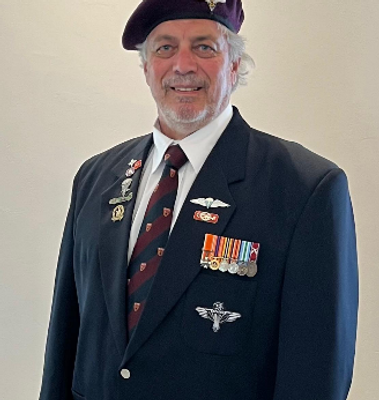
Rifleman C.N. (Neil) MacNamara HC – 1 Parachute Bn
SAMVOZA Western Cape - Veteran C.N. (Neil) MacNamara HC
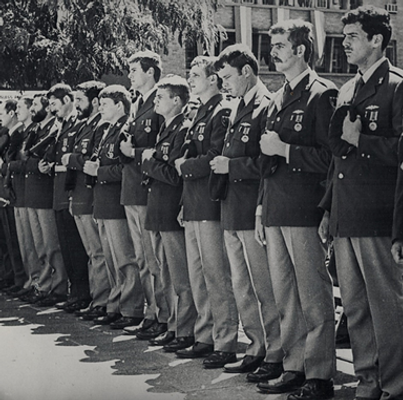
The rescue Puma was flown by Major Paul “Polla” Kruger, the mission
commander, with Lieutenant Nick Lithgow as co-pilot and Flight-Sergeant
“Ziggie” Hoebel the flight engineer. They were accompanied by a stick of
Parabats consisting of Riflemen Brian Southey, Assie de Lange, Ben Mare,
Neil McNamara, Bryan Gibson, and Lieutenant John Parkin.
The rescue force approached from the south; their task was to locate and
extract the injured pilot, who was located very close to a well-defended
enemy base A second Puma carrying an additional stick of six Parabats,
orbited the area in support of the lead aircraft, should they be needed. This
Puma also attracted and was hit by several enemy bullets.
Overhead, Major Bell’s wingman provided suppressive fire against the
advancing enemy positions. After expending his ammunition, he conducted
simulated attack runs in an effort to delay the enemy’s advance. He was
eventually forced to withdraw due to low fuel. Two additional Impala aircraft
replaced him, also attempting to suppress the advancing enemy. The threat
was significant, as the enemy had already shot down Maj Bell’s aircraft,
requiring the pilots to operate with extreme caution to avoid also being
struck / shot down by anti-aircraft fire.
Despite the heavy enemy fire, Major Kruger inserted the Paratroopers and
lifted off again. The Puma narrowly avoided being struck by rocket-
propelled grenade fire, with one RPG passing over the aircraft and another
exploding at the landing site moments after take-off. Once on the ground,
the situation deteriorated rapidly. What had begun as a rescue mission had
escalated into a contested high-intensity hot extraction, with the
Paratroopers operating under immediate and sustained enemy fire.
Rifleman Gibson located the injured pilot some distance from his parachute
and narrowly avoided mistaking him for the enemy. The enemy had
advanced from their trench system approximately 100 to 200 metres away
to within proximity to Major Bell’s position. They were aggressively
attempting to locate and capture him.
Once the pilot had been secured, Rifleman McNamara over the radio called
for an extraction. Reporting that the Paratroopers were under heavy enemy
fire. Aware of and notwithstanding the danger on the ground, Major Kruger
returned and landed the Puma.
Riflemen de Lange and Mare carried the injured Major Bell to the helicopter
while the remaining Paratroopers scramble to boarded. The Puma lifted off
under fire.
During take-off and withdrawal, the helicopter was struck by sustained 14.5
mm anti-aircraft fire and small-arms tracer rounds. Two rounds penetrated
the cockpit, grazing Major Kruger’s neck and disabling the intercom
system. Rifleman Gibson was struck by a 14.5 mm anti-aircraft round that
penetrated the floor of Puma’s fuselage, causing severe injuries to his hip
and arm.
Despite significant damage to the fuselage and rotors, and a visible fuel
leak caused by multiple enemy strikes, Major Kruger successfully flew the
damaged aircraft to Oshakati, where an ambulance was standing by to
evacuate the wounded. After a brief assessment of the bullet-riddled
helicopter, which was still dripping fuel, Major Kruger decided to fly the
Puma back to Air Force Base Ondangwa.
In recognition of their bravery and exceptional conduct during this search-
and-rescue hot extraction operation, the South African Air Force aircrew;
Major Kruger and Flight Sergeant Hoebel, and the Parabats Lieutenant
Parkin and Riflemen Mare, de Lange, Southey, Gibson, and McNamara
were each awarded the Honoris Crux.
